

Reinvent vs replace: why rebuilding your tools is usually the wrong move
Replacing a system is a project with a launch date. Reinventing it is an afternoon — and then it compounds.
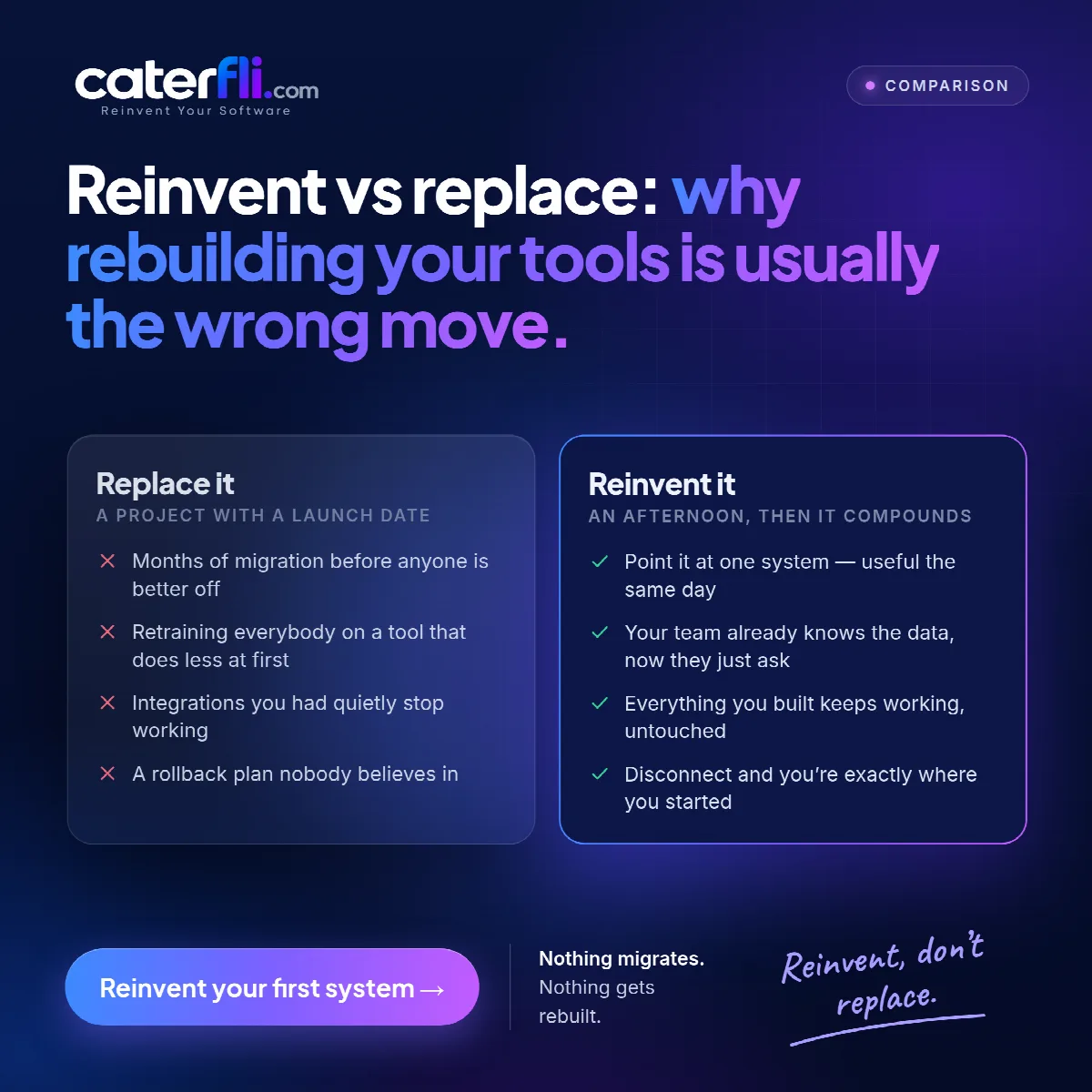
When a system starts to feel old, the instinct is to replace it. A new platform, a clean data model, screens that look like this decade. The proposal usually has a launch date on it, and the launch date is usually the first thing that turns out to be wrong.
What replacing actually involves
Replacing a working system is not one project. It is several, run in sequence, each with its own surprises.
- Months of migration before anyone is better off. Every table has to be mapped, every odd historical record explained, every edge case the old system handled quietly rediscovered.
- Retraining everybody on a tool that does less at first. The old system had years of small accommodations built into it. The new one starts without them.
- Integrations that quietly stop working. The webhook nobody documented, the nightly export a supplier depends on, the script someone wrote in 2019.
- A rollback plan nobody believes in. Once data starts being written to the new system, going back is a second migration.
Sometimes it is still the right call. A system that is genuinely failing, unsupported or insecure should be replaced, and no layer on top of it fixes that. But a lot of replacement projects start from a different complaint: the system works, it is just hard to get answers out of.
Reinventing instead
That complaint has a much smaller fix. Leave the system where it is and change how people reach it.
Caterfli connects to the database, API or MCP server you already run. Discovery reads what it can do — tables, operations, tools — and turns each capability into a tool an agent can call, with a risk level attached. The team asks in web chat, Slack, WhatsApp or Telegram, and the agent answers from the live system.
The difference in shape matters more than any feature:
- Point it at one system and it is useful the same day. There is no cut-over date. One connection produces a working agent to review, test and deploy.
- Your team already knows the data. Nobody has to learn a new model of customers or orders. They ask about the ones they already know.
- Everything you built keeps working. Your admin panel, your integrations and your reports are untouched. On a database, Caterfli refuses schema changes outright, so the structure your other software depends on cannot be altered through it.
- Disconnect, and you are where you started. Nothing was migrated, so there is nothing to migrate back.
One honest qualification. If you let an agent write — and writes are off on a new database connection until you turn them on — the changes it made are real changes in your system, and they stay. They are also listed in the change log, with the record, the agent, who asked and who approved, so you know exactly what they were.
Then it compounds
A replacement delivers its value at the end, if it delivers. Reinventing delivers a little on the first afternoon and more each time you add to it: a second connection, a channel the warehouse already uses, a saved question that runs every morning. None of those require reopening the first one.
This is the bet behind the whole product. Most software does not need replacing. It needs someone who can operate it on everyone else's behalf, with the right checks in place. Three moves is all the setup asks for.
0 comments
Sign in to join the discussion.